You are using an outdated browser. For a faster, safer browsing experience, upgrade for free today.

Loading...

EVO TRAPPER dynamic rail scale

METALLIC
HEAVY DUTY

In the following, the complete FLINTAB EVO TRAPPER dynamic rail scale is presented equipped, including the interconnection of all electronic equipment.

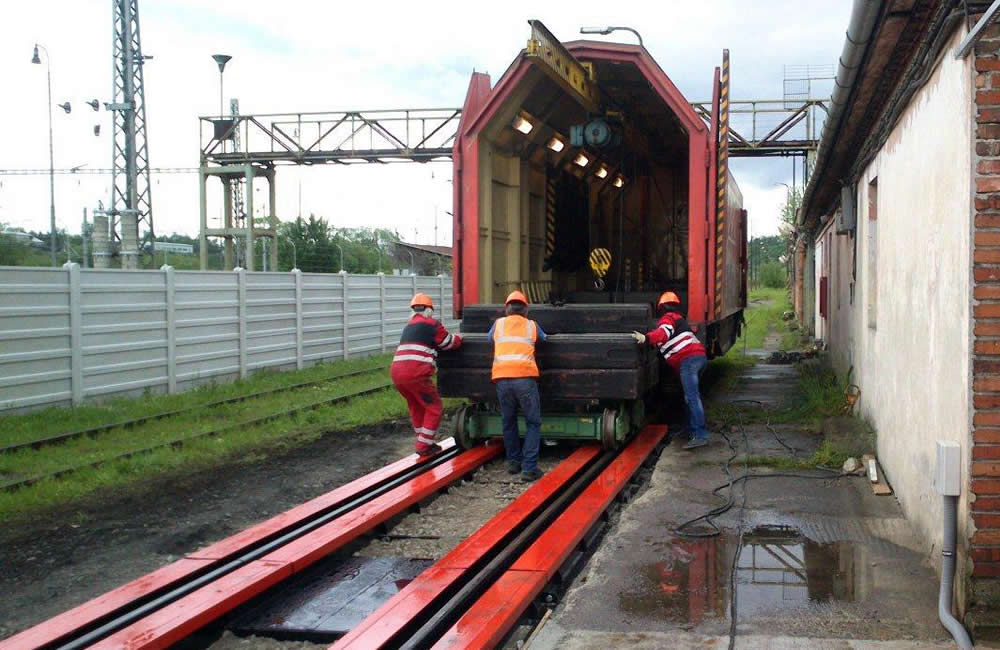
The electronic weighing system described allows weighing the wagons with the bogie on the go railway loaded with solid, coupled products in a train set, pulled or pushed,

in accordance with the required speed conditions. The weighing system shown provides a high degree of robustness and reliability, elimination complete mechanical maintenance of the receiver load, virtually zero maintenance requirements, all these due to the simplified construction and a electronic components with verified reliability made in GERMANY.

No in-situ concrete pouring works.
  • The remarkable qualities of an all-metal construction, robust and supple
  • "Top" model

TECHNICAL DATA

Number of modules 1
Weighing platform length 8.2m: 2m [inactiv] + 4.2m [activ] + 2m [inactive]
Weighing method Bogie with bogie
Accuracy class Dynamic weighing: class 0.5 for wagons according to OIML R106
Dynamic weighing: class 0.2 for trains according to OIML R106
Division 50kg
Maximum capacity 60000kg
Weighing range 6000..60000kg
Weighing cells RC3-30t-C4, RC3-40t-C4
Proximity sensors induction (IP67)
Summary box IP66
Meaning of weighing BI-directional
Maximum number of wagons 40 wagons
Train speed during weighing 0.2 .. 10km/h
Operating time continuous: 24 hours a day, 7 days a week
Maximum number of trains registered 100
Transmission of data from the weighing terminal to the operator PC station Wireless, compatible with IEEE 802.11b / g and IEEE 802.11n draft 2.0
Operating temperatures Platform: -40..+60°C
Platform: -40..+60°C
Weighing cells: -40..+80°C
Electron: -10..+40°C
Relative humidity (no condensation): 40..80%
Supply voltage ~230Vca ±10%, 50 Hz ±2%
Electric power max. 450VA

OVERVIEW:

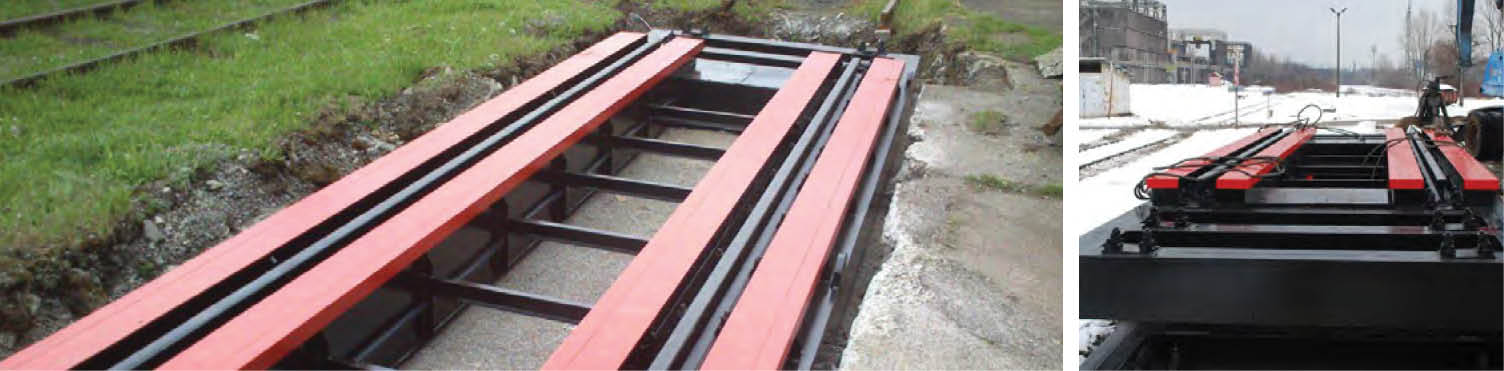
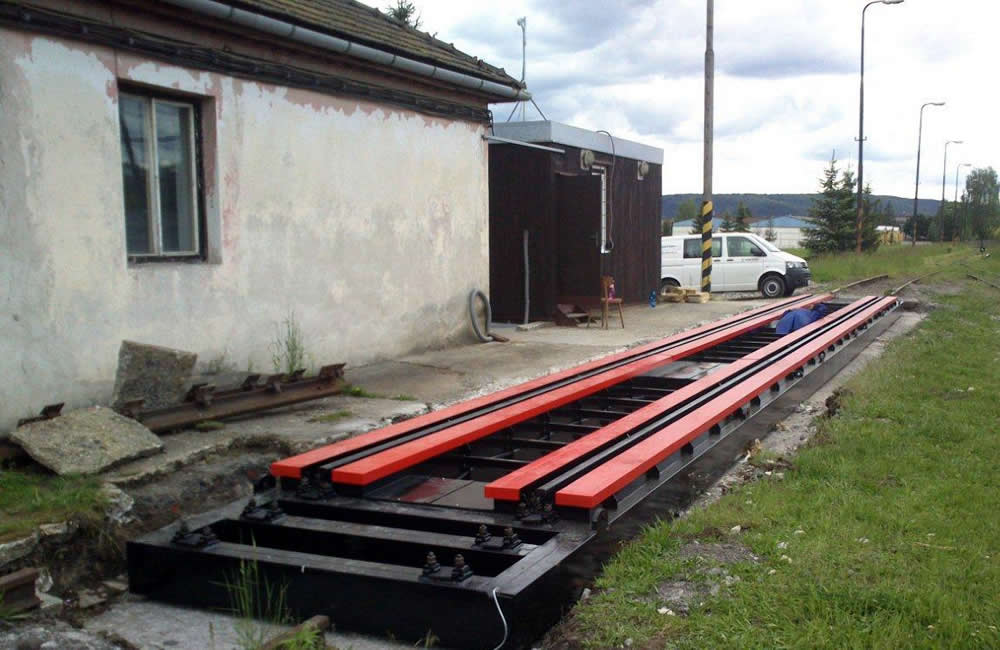
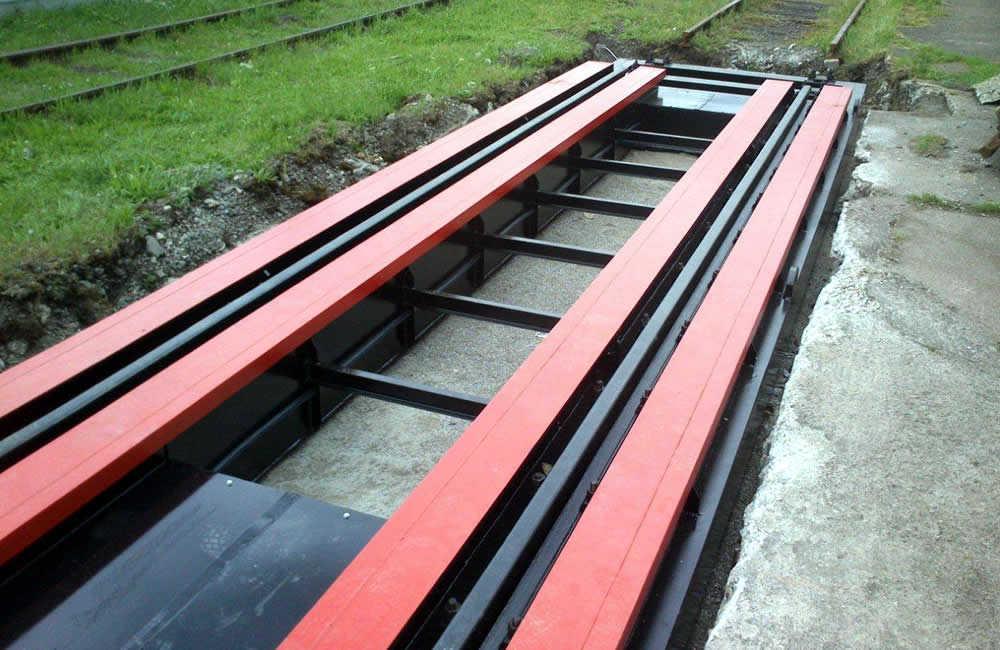
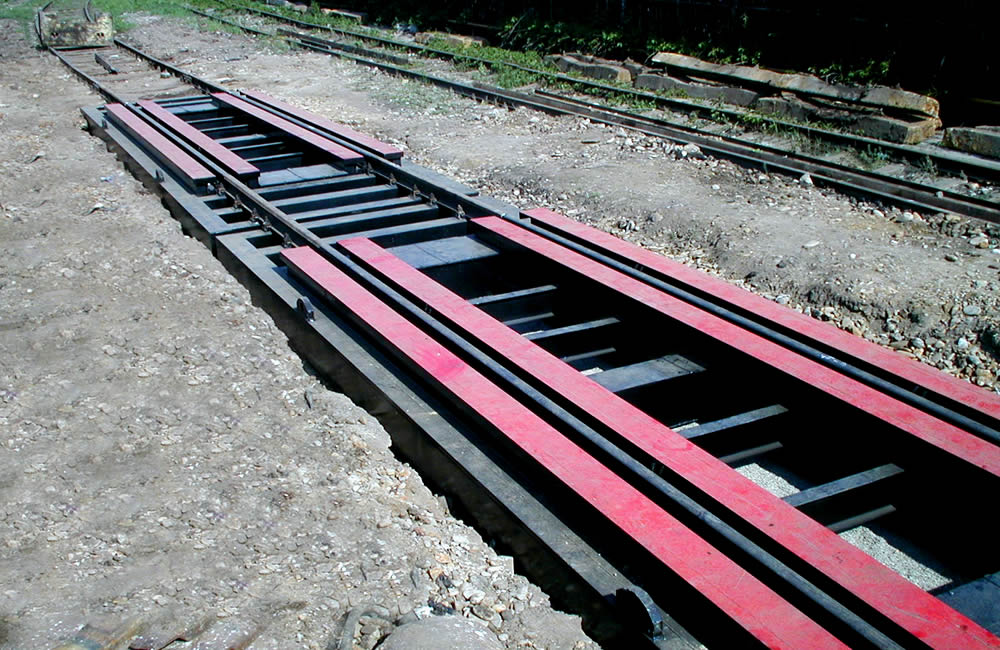
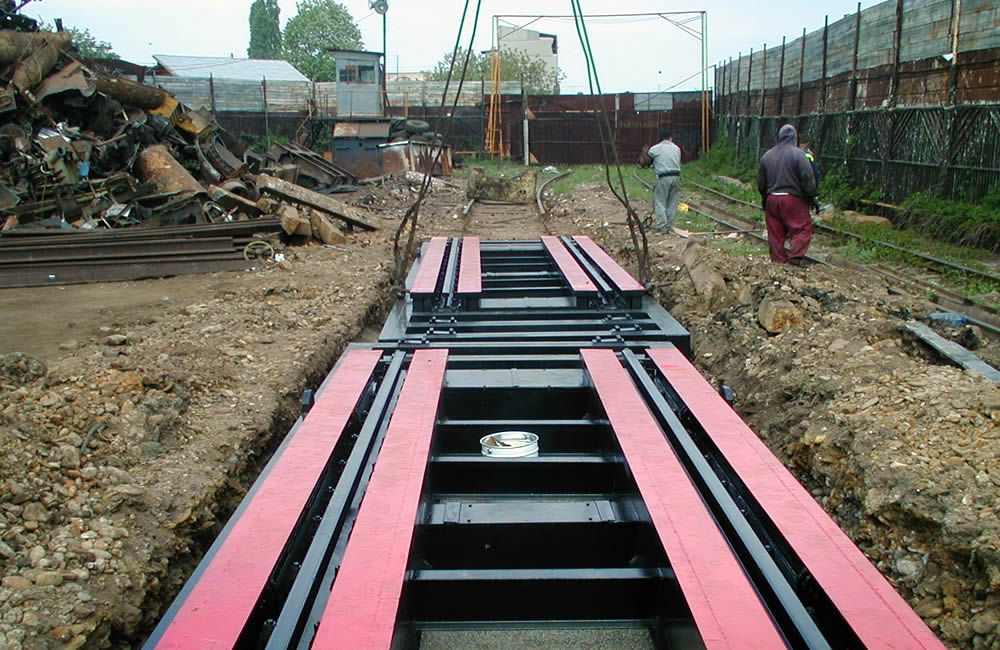
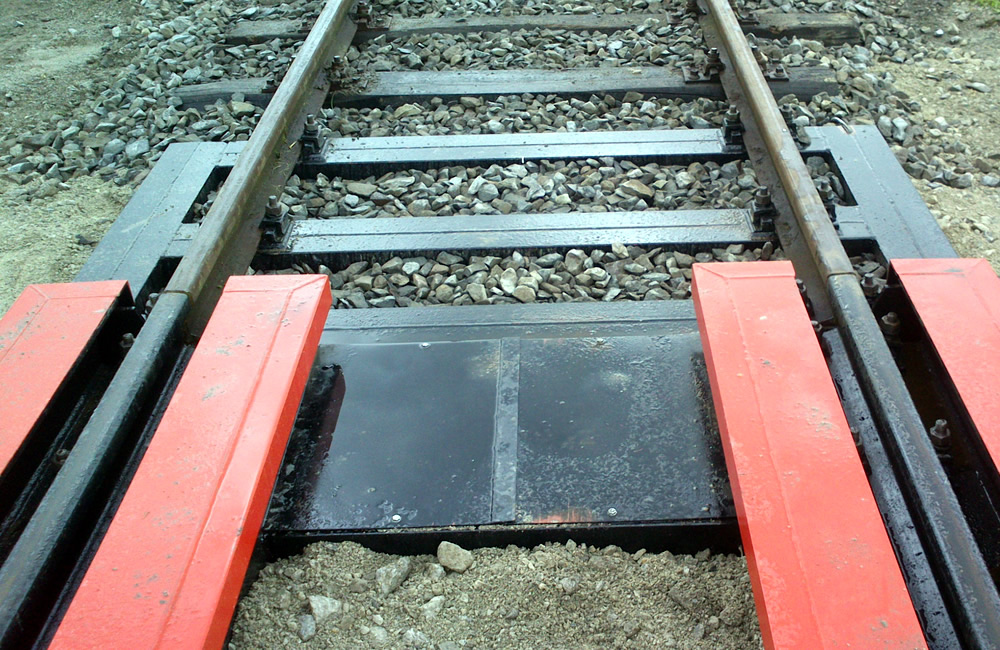
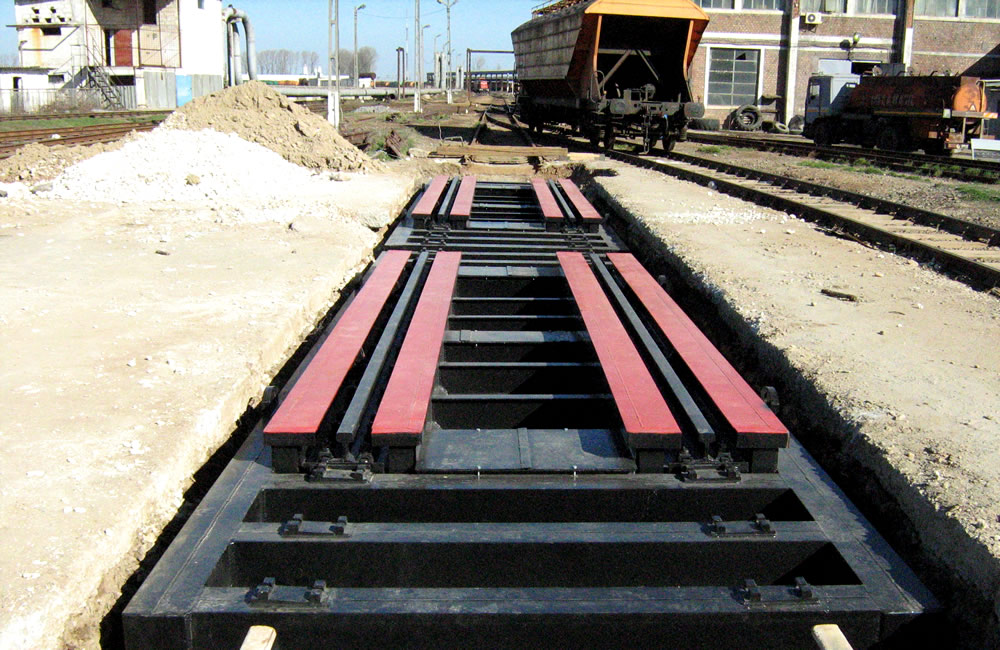
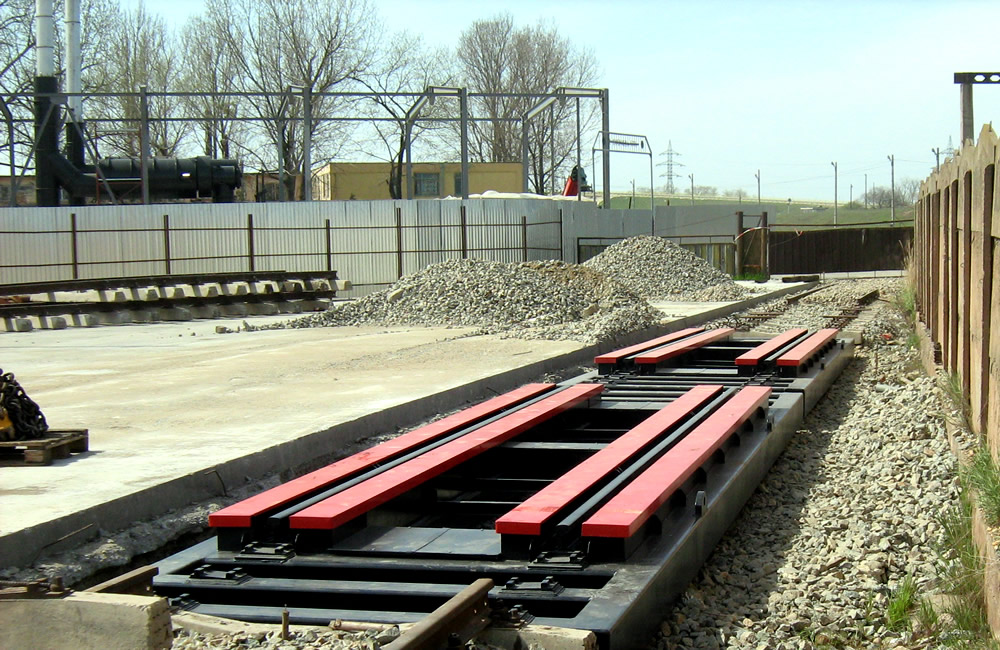
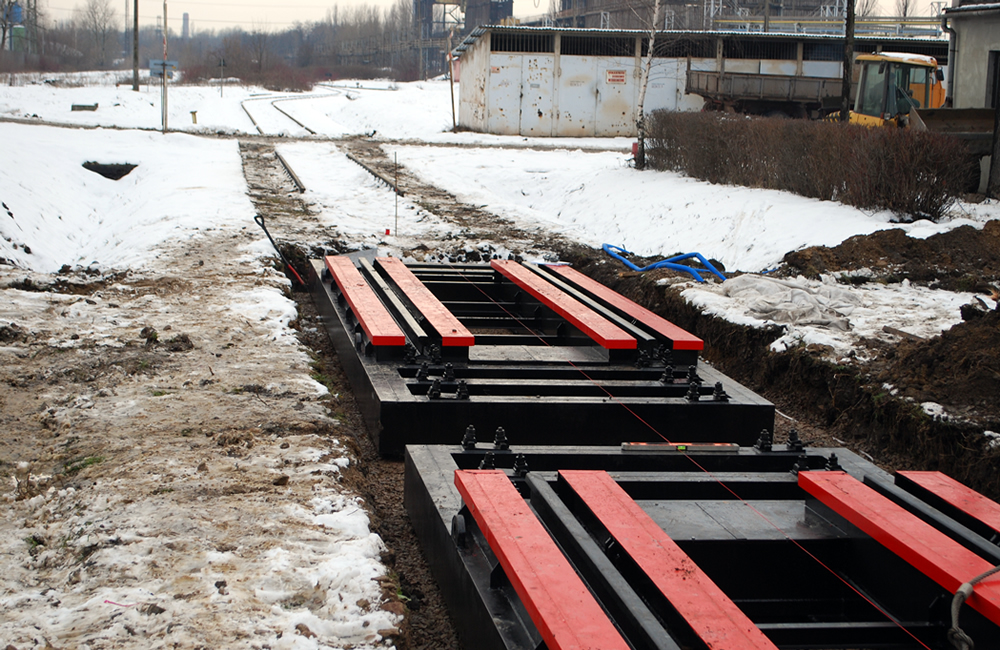
The FLINTAB EVO TRAPPER dynamic railway scale sits directly on the broken stone infrastructure of the railway, without the need to dig a pit. This has the following benefits:
  • Modular construction (two or more modules)
  • No complicated foundations are needed; it is not necessary to pour concrete foundations
  • due to the “SLIM LINE” construction, the depth of placement of the frame on the railway infrastructure is only 34cm below the NST (upper cross member level)
  • the frame is a monolithic construction
  • the scale is manufactured and assembled under factory controlled conditions
  • the scale is tested and calibrated at the factory
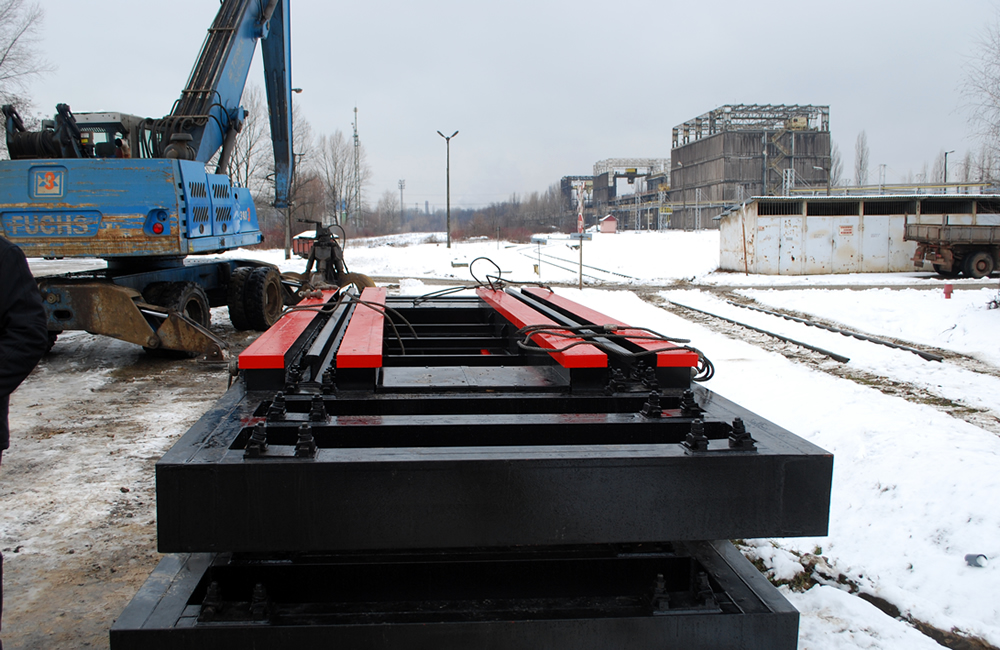
  • the modular design allows the delivery of the fully assembled and wired scale, ready to be placed on the normal railway infrastructure
  • all parts, including weighing cells are accessible from ground level (maintenance free)

PLACE REQUIREMENTS FOR ASSEMBLY

  • the straightness of the sides of both scales and the deviations of the upper surfaces of both scales must comply with the requirements of FLINTAB;
  • the braid must not have any curve or deviation over a length of 30m from each side of the scale;
  • if the installation site is subject to flooding, it will be provided with a drainage system to prevent partial or total flooding of the scale;

PREPARATORY WORK REQUIRED

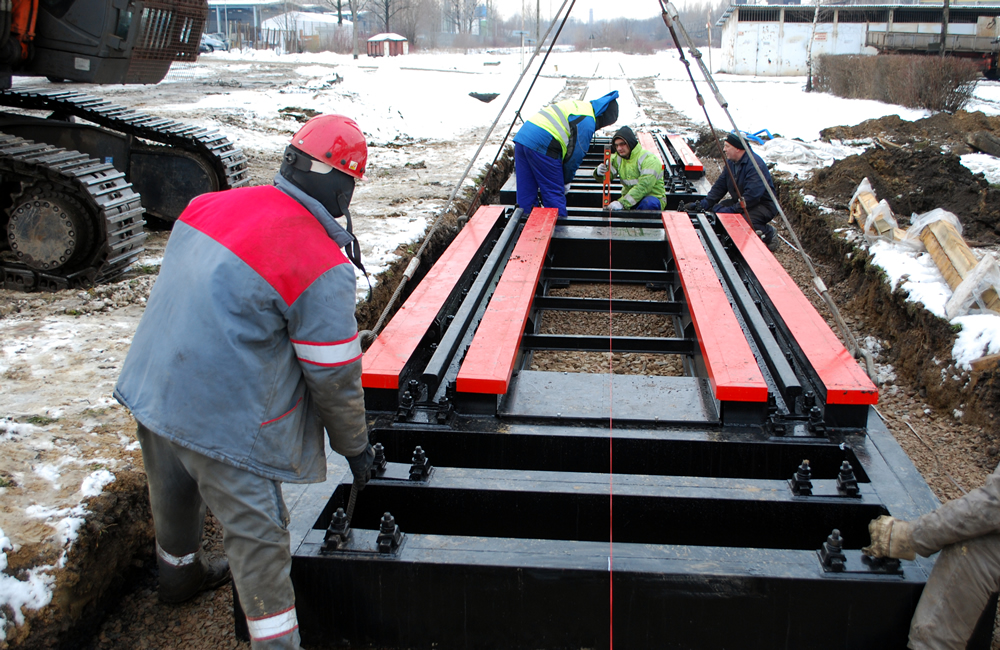
  • rails and sleepers are removed to a length equal to the length of the scale;
  • the track ballast is excavated (where appropriate) until the sand level is reached; the sand must be clean (without being impregnated with fuel oil, oil, etc.); the track ballast must be rebuilt in accordance with railway regulations;
  • the scale is placed over the restored ballast at the indicated height;
The FLINTAB electronic weighing system has no moving parts and is easy to calibrate according to OIML regulations.
The weighing system automatically identifies the locomotive, the wagon bogies, the train direction, the number of wagons, the speed of each wagon, the start and end date of the weighing process, all without operator intervention.

The status of the weighing process is transmitted in real time to the remote operator, who can intervene at any time during the weighing process, when the travel speed is not observed or when making illegal maneuvers on the scales (accelerating or braking the train on the scales, stopping train during the weighing process and change of direction) etc.
The weighing system measures the mass of each bogie, the mass of each wagon and the total mass of the convoy / train, automatically excluding locomotives. The measurement of the mass is done on the go, by pulling or pushing the wagons over the weighing platform to a maximum speed over time weighing 12km / h.

The maximum capacity is 60t per bogie, and the accuracy class for dynamic weighing is class 1 for wagons and class 0.5 for train, according to OIML R106 / 1993. The weighing system can perform static weighing according to OIML R76-1 / 1992, having the accuracy class III.

NOTE: The FLINTAB dynamic rail scale does not require a by-pass railway for trains they do not want to be weighed.

SYSTEM CONFIGURATION

All electronic equipment in the dynamic weighing system is manufactured German. The system consists of:
  • weighing platform
  • electronic wagon identification system
  • visual signaling system of the weighing process
  • digital weighing indicator on which the weighing program is running
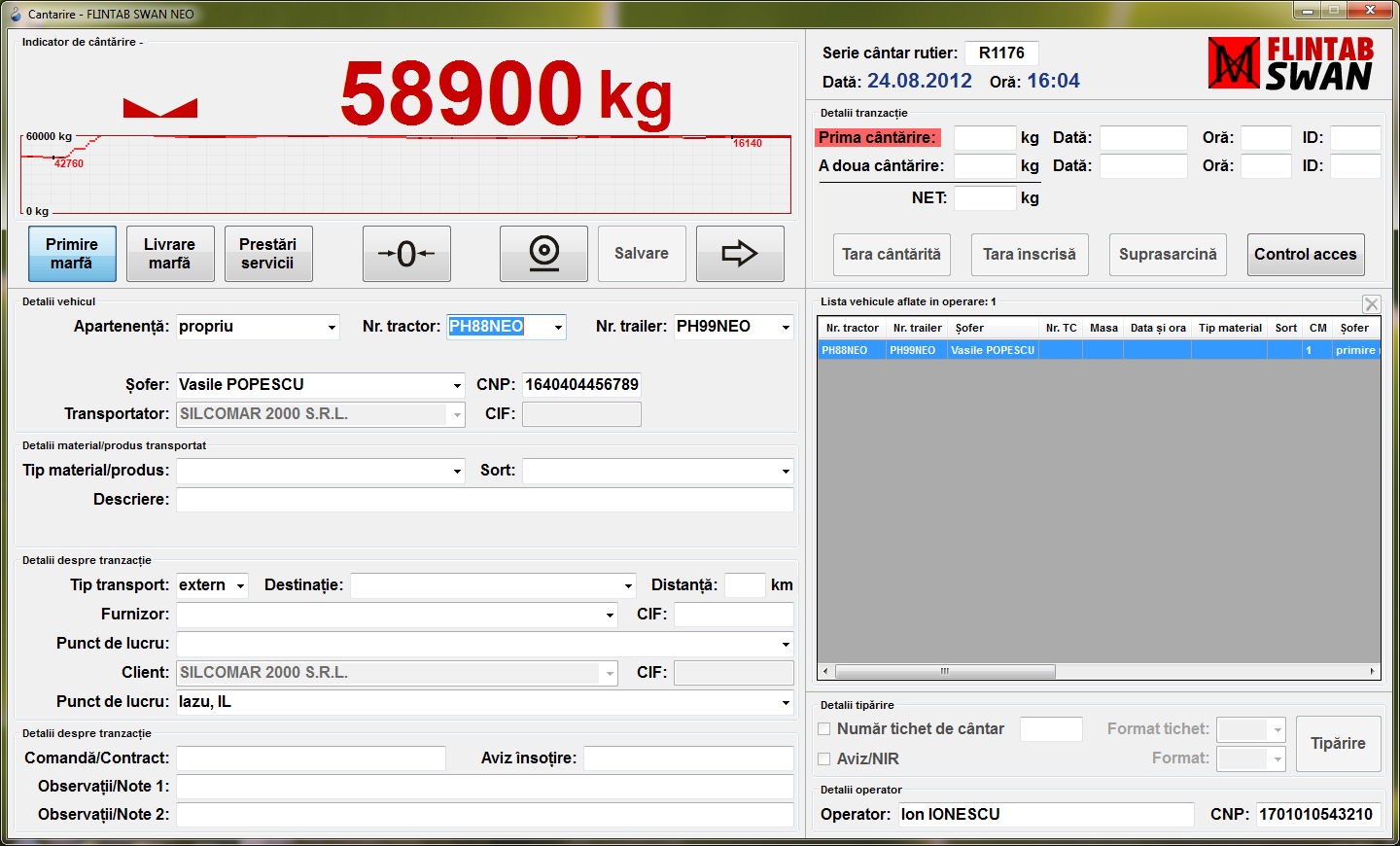
  • PC station running a special remote operation and weighing management program
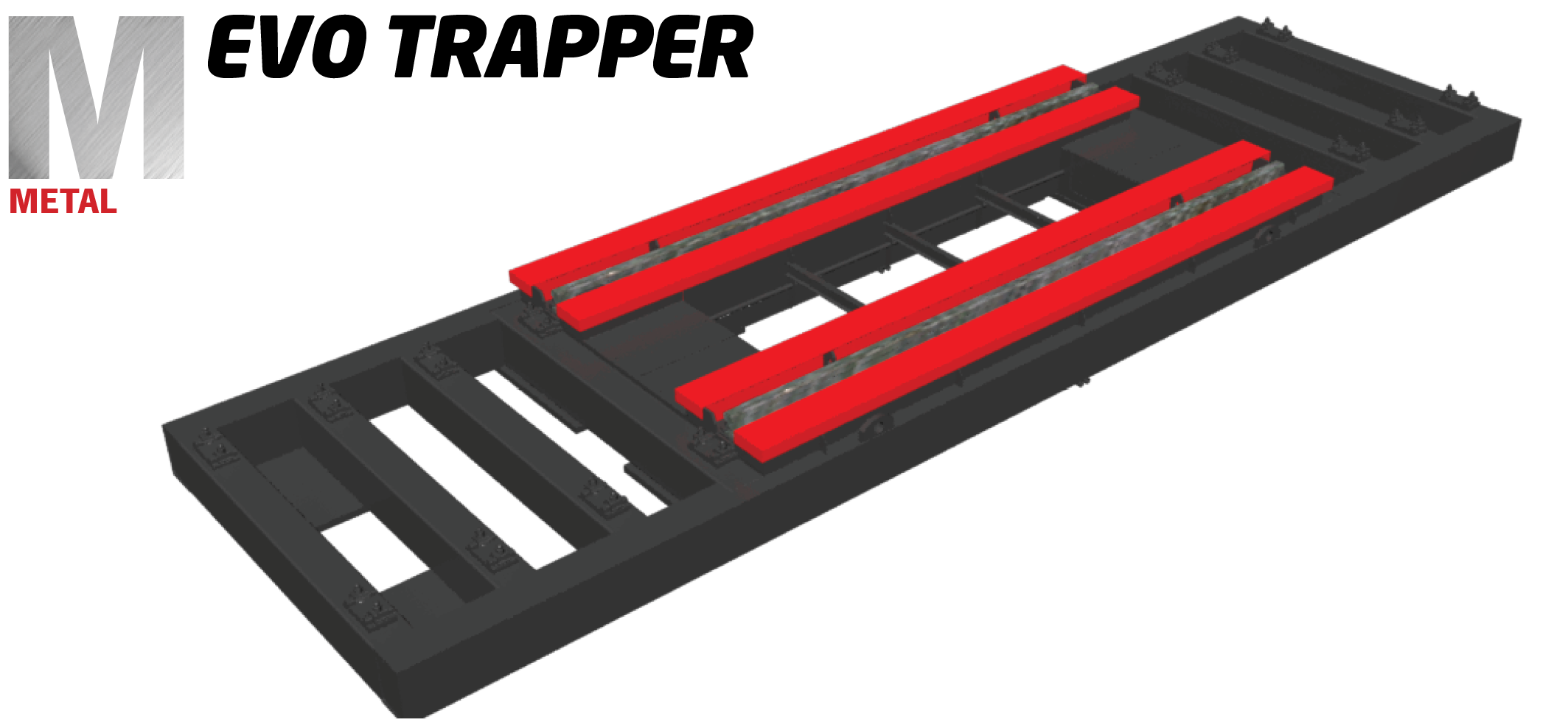
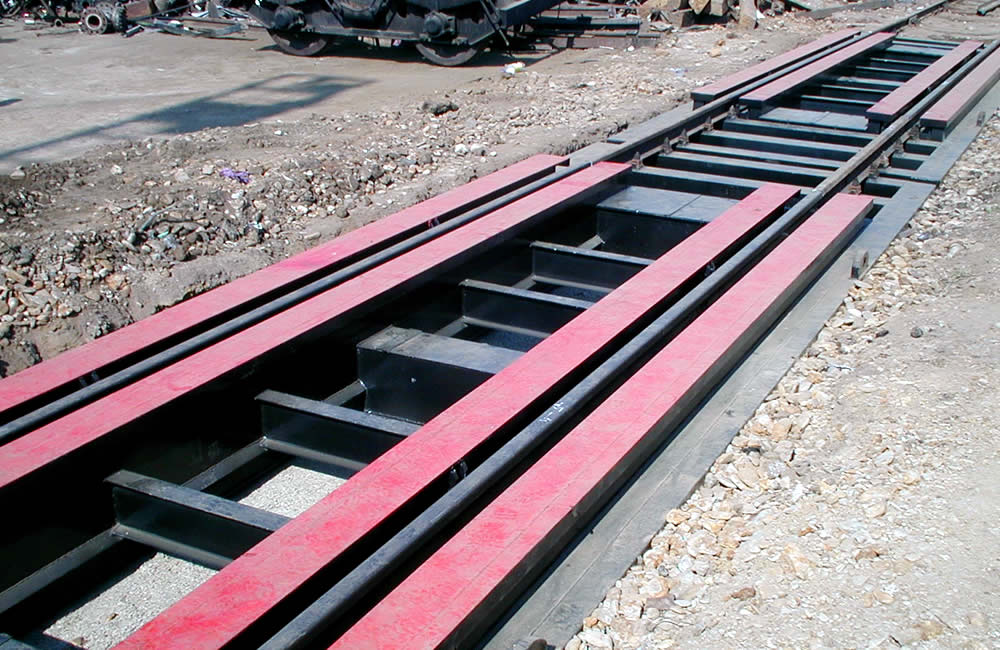
EVO TRAPPER weighing platform structure is metallic with beams (active component weighing) mounted on a complete foundation metal and robust that installs directly on broken stone infrastructure of the railway without concrete pouring works.
Resistance structure of weighing beams it is considered the best support structure of “I” beams (extended steel I-beams), design recommended as "the best practice" by most competent international authorities in the fields transport and road construction and bridges (the railway scale being assimilated with a bridge structure).
Also the design of the FLINTAB platform excludes enclosed spaces where excessive humidity can initiate corrosion processes from the inside to exterior.
The weighing beams are mounted in a frame U-shaped metal and closed with such a maze so as not to accidentally penetrate material (ballast, etc.) of the railway infrastructure.
Each beam is placed on two cells weighing, one at each end, and both Weighing beams are connected to each other by a momentary arm at the ends of each beam. This construction allows the beams to work independent without being exactly on the same level.
Notes: Compared to rigid structures mounted on a concrete foundation, which require all four support points are at the same level, the advantage of the EVO TRAPPER dynamic rail scale, surface, is that the support points may not be at the same level, the beams working independently one girl on the other. This is why the structure can be mounted directly on the ballast surface, the accuracy is not altered by the possible compression of the ballast. Weighing modules will be delivered to the location assembly, fully equipped with weighing cells, wired and interconnected.

Professional shock absorbers and shock absorbers allow the two to be fixed precisely scales of the scale, but without affecting in any way the process of dynamic weighing of the wagons for any permitted running speed.

Loadcells

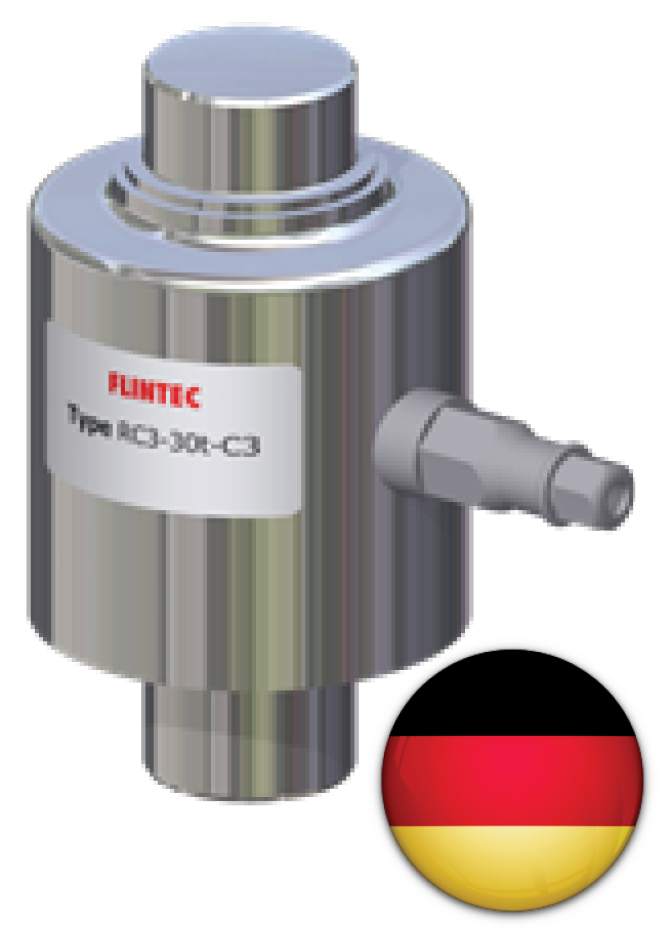
FLINTEC GERMANY weighing cells are RC3 weighing cells mounted in mounting kits special construction. Unique weighing cell design and mechanical weight transmission assembly through the revolutionary concept of self-aligning ROCKER COLUMN lead to an excellent introduction of the load and minimum mounting kit dimensions.

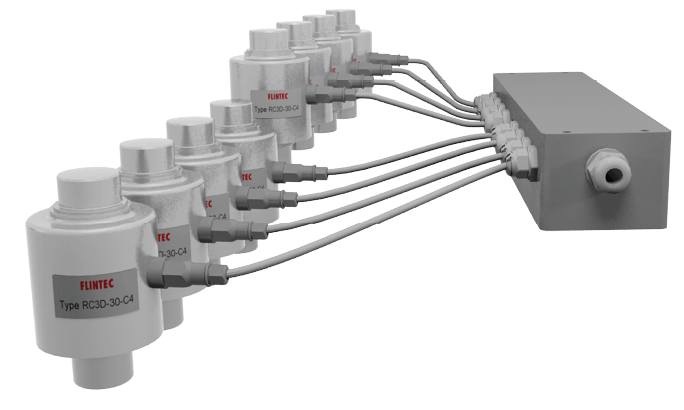
The load is transmitted from the weighing beams to the weighing cells through the cells of the cells. They do that the load is applied correctly to the weighing cells and also allows thermal expansion in the beams. weighing. Each cell is equipped with a shielded cable, completely hermetically sealed by a glass-sealed metal gland, used in industrial environments, with a degree of protection IP68 / IP69K. The cables from the four weighing cells are connected in a summation box mounted inside the weighing module.
The summation box is made of FRP (fiberglass reinforced polyester), IP66, with IP68 glands and contains the standard fitted connection board with protective shutters for electric shocks and silica gel for protection anticondensation. The FLINTEC calibration technique (in mV / V / Ω) eliminates the difficulties of calibrating a corner calibration in systems with multiple weighing cells, otherwise, time consuming metrological checks. Optionally, the RC3 is available for use in hazardous environments explosion 0, 1, 2 (gas) and 20, 21, 22 (dust) according to EEx and IIC T6..T4 T130 ° C ATEX.
Characteristics of FLINTEC RC3 weighing cells:
  • remarkable accuracy
  • stainless steel construction
  • perfectly airtight sealing
  • protection IP68, IP69K
  • electric shock protection: gas discharge electronic tubes
  • high input resistance: 1100 Ohm
  • metrological certification for 4000 intervals

ELECTRONIC WAGON IDENTIFICATION SYSTEM

The electronic wagon identification system consists of:
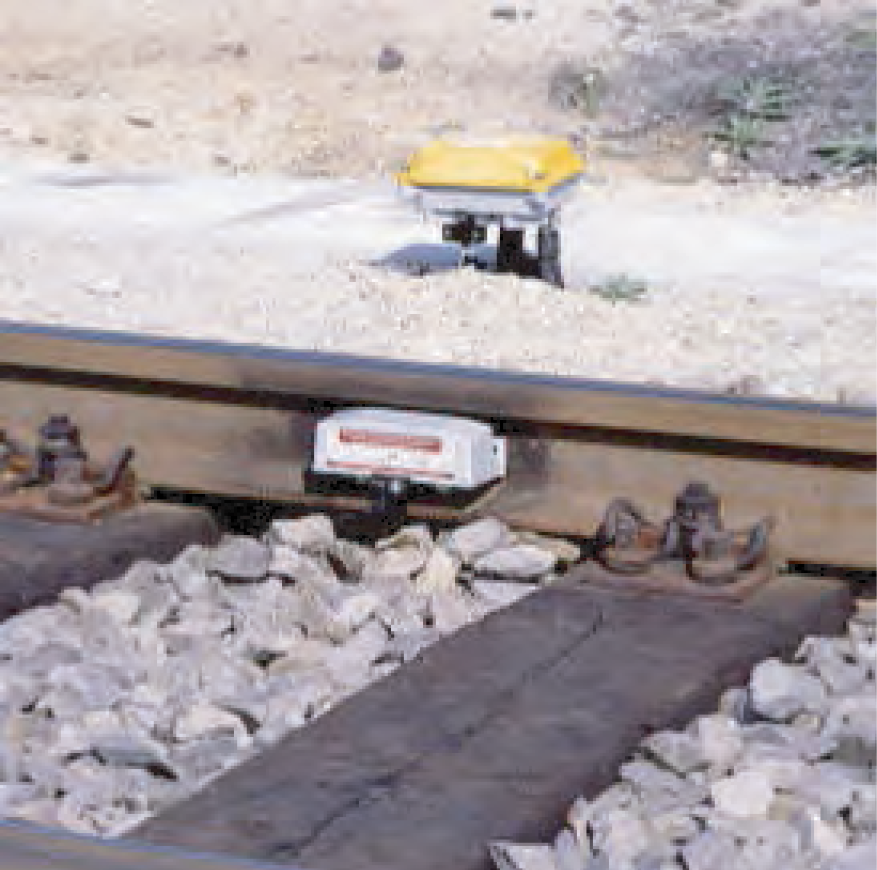
  • two dual inductive wheel sensors each installed at both ends of the weighing platform
  • a junction box for the two inductive sensors
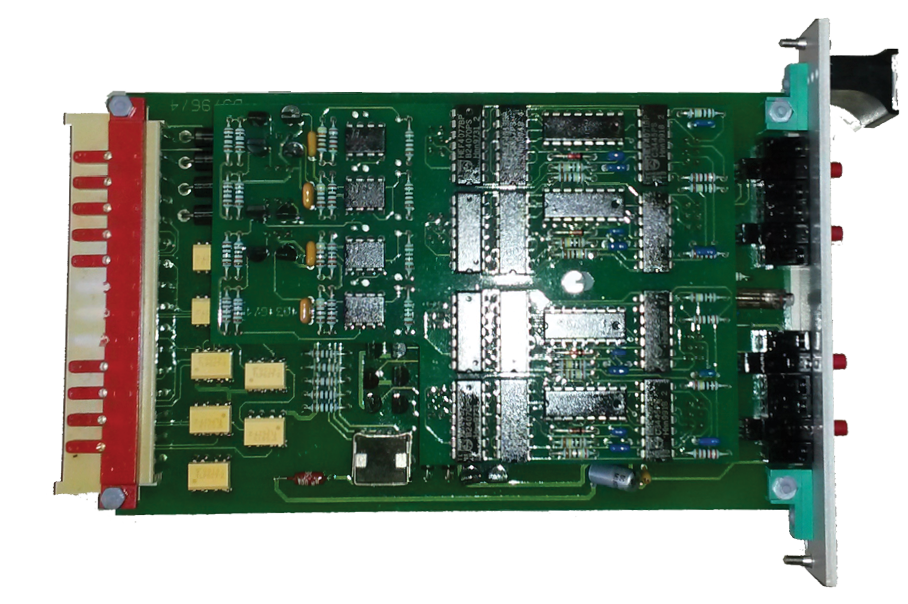
  • a conversion module having an electronic signal amplifier for wheel sensors, a pulse trainer and a simulator for wheel sensor signals (for service tests)
Inductive wheel sensors for wagon wheel identification are dual - TIEFENBACH GERMANY brand, so the two pairs of inductive sensors allow:
  • directional counting of wagon axles
  • determining the direction of travel of the train
  • measuring the speed of movement of the bogie on the weighing platform
  • detection of a change in the direction of travel of the wagon (in this case the weighing process is canceled automatically)
The main advantages of these inductive wheel sensors are:
  • detects non-contact wheel from max. 45mm vertically
  • no adjustment required for the entire rail and wheel wear section (max. 50mm)
  • the rail is not affected in any way by attaching the sensor
  • the response signal is real time
  • it has no temperature restrictions (-30..+60°C)
  • maintenance free (750000h service)
  • they are small in size
These wheel sensors monitor the passage of wagons over the weighing platform, commanding the beginning and end of the weighing process of each bogie. The junction box connects the two wheel sensors to the electronic module processes the four electrical signals.
To amplify the transmitted electronic signals, the inductive sensors connect to a conversion module. It amplifies and formats the signals. outputs The digital modules of the conversion module are connected to the digital inputs of the I / O modules of the digital weighing indicator IT8000ET, where they are compared with each other as phase for determining the direction of travel and the position of the wheels on the load receiver.

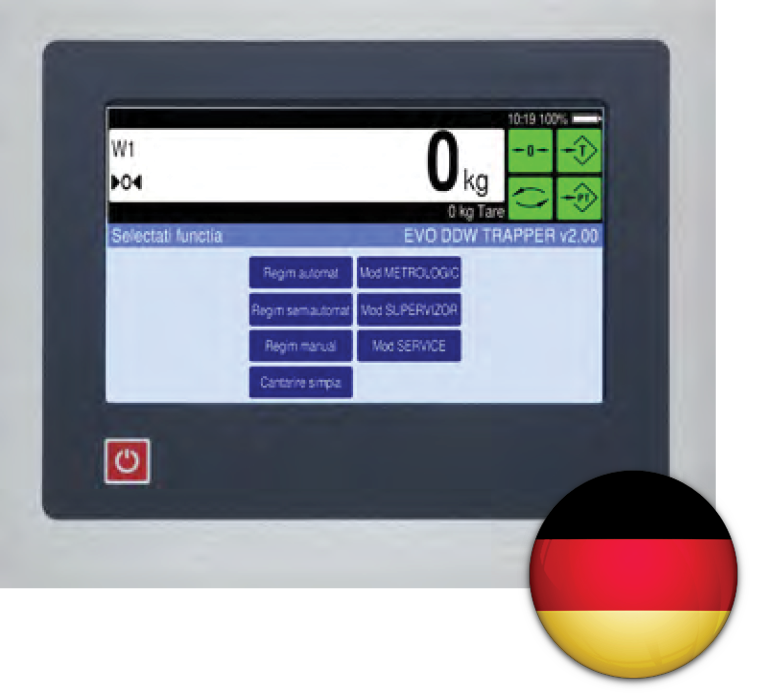
Digital weighing indicator SysTec GERMANIA IT8000ET

  • Certification: EC examination certificate issued by PTB GERMANY, a notified body in the European Union
  • Housing material: stainless steel
  • Alphanumeric display: 5.7 ”color
  • Standard communication interface: Ethernet
  • Digital interface: 4 optically isolated digital IN / OUT
  • Fast signal processing: up to 800 reads / s
  • Calibration: digital, through dedicated menu
  • Keyboard 62 keys: On / Off, Sum, Zero, Hard, Print, Function, Alphabetical, Numeric
  • Adjustable electronic filters for attenuating oscillating signals from the weighing platform or any other parasitic signals. Limited zero point displacement to compensate for deviations caused by the accidental deposition of snow, mud or deposits on the platform
  • Diagnostics: Remote Ethernet
  • Protection of stored data: by system password and supervisor password
  • Configuration and options: flexibility due to the modular concept
  • Integration: Linux operating system with integrated web server
The digital weighing indicator (IDC) is CE certified and performs up to 800 readings / s of weighing, for accurate reading of the mass of the moving bogie, according to real-time reading algorithms. IDC has the automatic zeroing function to compensate for deviations due to mud accumulation, snow etc. on the weighing platform. This function is automatically canceled during the process weighing.

The IT8000ET digital weighing indicator receives and processes the signal received from the cells weighing and signals received from track sensors. By processing them, it simultaneously obtains, stores, displays, prints and transmits via the Ethernet interface to the PC station the results of the weighing process.

The weighing program, which runs in IDC, performs dynamic weighing of the wagon trim, weighing each bogie and calculating the mass of each wagon and the total mass of the train, travel speeds, etc. It stores in the IDC memory the data corresponding to the weighing process for the entire train and communicates with the operator's printer via the Ethernet interface. The data transmission from the weighing terminal is wireless, using an Ethernet access point industrial ADVANTECH with a power of 26dBm and with a built-in directional antenna of 8dBi, which ensures a secure data connection for the industrial environment. The wireless connection is secured using the latest encryption technologies. Using the STP, WMM and IGMP protocols ensures a reliable wireless connection.

PC station and printer

Medium market configuration, with pre-installed operating system:
  • Processor 2.0GHz
  • Memory 2.0GB
  • HDD 20GB
  • Monitor with native resolution 1280x1024 or 1440x900
  • RS232 / USB serial interface or a TCP / IP ethernet interface
  • Operating system Microsoft Windows XP SP3, Microsoft Windows Vista SP1 or Microsoft Windows 7
  • HP LaserJet PRO P1102 Black and White Laser Printer

Software

Commercial transaction management software system:
  • Easy operation based on windows, menus and lists
  • Real-time weight monitoring
  • Printing, including viewing of issued weighing notes
  • Management of weighing data with issuance of weighing notes and rescue in databases (date, time, COUNTRY, GROSS, NET, product, etc.)
  • Reporting commercial transactions for selectable periods of time
  • Protection against intent to fraudulently use weighing data

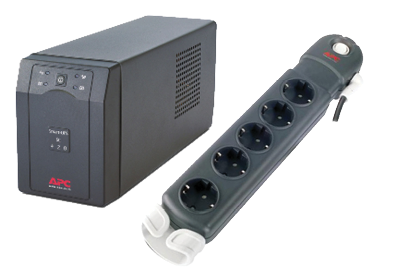
EEP additional electrical protection package

  • Flashing socket and quick fuses for protection against surges and electric shocks in the power supply network
  • Uninterruptible power supply UPS minimum 500VA
  • Extender with the necessary sockets for the system as a whole

DESCRIPTION OF THE WEIGHING SYSTEM

  • The association between the serial number of a wagon train / convoy (whose weighing data were purchased and processed by the weighing system through the IT8000ET terminal) and the unique wagon series;
  • Management of trains waiting, in operation, completed and canceled;
  • Chronological and systematic management of scale tickets in the database;
  • Scheduling of known trains that will be weighed automatically;
  • Automatic weighing of trains transiting the railway scale and separate saving of scheduled and unscheduled trains;
  • Automatic resynchronization of the weighing terminal with the database on the PC / server station, in case of data connection interruption;
  • Signaling the state parameters during the weighing process;
  • Printing of train / wagon scales and detailed reports by time period, company, product, etc.
LOCAL OPERATION
The operation of the weighing terminal can be done:
a. Local: from the IDC alphanumeric interface;
b. Remote: via IDC's Ethernet interface;

Locally, the operator is guided by the intuitive color interface of the IT8000ET terminal.
Data is entered through the touchscreen keyboard of the IT8000ET terminal. Typical weighing operations using the IDC interface are:
  • Select "START" softkey on the keyboard
  • Enter operator ID
  • Train series introduction
  • Start weighing process
  • The system weighs all the wagons and displays the weighing data
  • The system stops weighing
  • Scale ticket printed (auto print active)
  • The data is transmitted to the PC station
  • End of weighing process; the system is waiting for the next train
The weighing data for each train is automatically saved in the FIFO type memory of the weighing terminal. The weighed train automatically exits the operating state. Depending on the weighing result, it switches to completed or canceled trains (accessible from the "Records" submenu). In the case of completed trains, the values ​​for each wagon in the train component are updated accordingly. When the "CANCEL" function key is pressed, the operator manually cancels the train in operation. The weighing operation is carried out in good condition by a signaling system (traffic light, traffic light, alphanumeric external display, etc.) positioned next to the weighing platform, according to the chosen option.
REMOTE OPERATION
The weighing program installed on the PC station allows the management of trains waiting, in operation, completed and canceled. The program allows the weighing of the wagons (full and empty) of the trains in operation, which can be grouped in convoys for maneuver.
The weighing program allows two distinct modes of operation:
  • Train operation
  • Convoy operation
At one time, there could be only one train or one convoy in operation. Convoys can be part of a particular train or a series of full / empty wagons of one or more trains in to operate. Each convoy will be weighed only once for determination of the COUNTRY / GROSS values of the wagons in component. These wagons are characterized by the series of wagon, the train series from which they come and the weighing number (may be on first weighing - C1 - or on second weighing - C2 -). The convoy is characterized by the number of wagons, the position locomotive and convoy ID (automatically generated by the system weighing for each individual weighing).
Each train is characterized by the series train and the list of wagons in component. The order of the wagons is not it is important because every wagon is identified by the wagon series. After that each wagon is weighed by two or - full and empty - a ticket will be issued weighing on the train that will include the list all wagons identified by their number, the values of GROSS / COUNTRY / NET. When printing the scale ticket, order wagons in the train component will be the one corresponding to their introduction.
After the full / empty weighing is completed for each wagon - identified with the wagon series - from component of a train (except for wagons canceled by the operator which appear by default with a value of zero to COUNTRY and GROSS), this train can be switched by the operator to completed trains. Ticket can be printed scales only for completed trains that have all required fields completed. If all the wagons of a train in operation are completed and no rewiring is desired In any car, the operator can switch the selected train to completed trains by pressing the button "Completion". Canceled trains are those trains that, for various reasons, can no longer be weighed. The selected train can be canceled by the operator by pressing the "Cancel" button.

Notes:

  • The wagon series will be fully introduced to avoid operating errors; the weighing program will check the correctness of the wagon series;
  • Statistical reports / statements can be generated from the operator's PC station or from any PC station in network that has access to the weighing program database.

PHOTOS

This website uses cookies. By continuing navigation means your accept. Read more...